 +91 8362744443 / +91 8362744444

Pregnancy is a journey filled with anticipation, hope, and questions. One of the most important early milestones in this journey is the First Trimester Screening, commonly known as the NT scan.
As a fetal medicine specialist, I often tell parents — this scan is not just another ultrasound. It is an important step toward ensuring your baby’s healthy beginning.
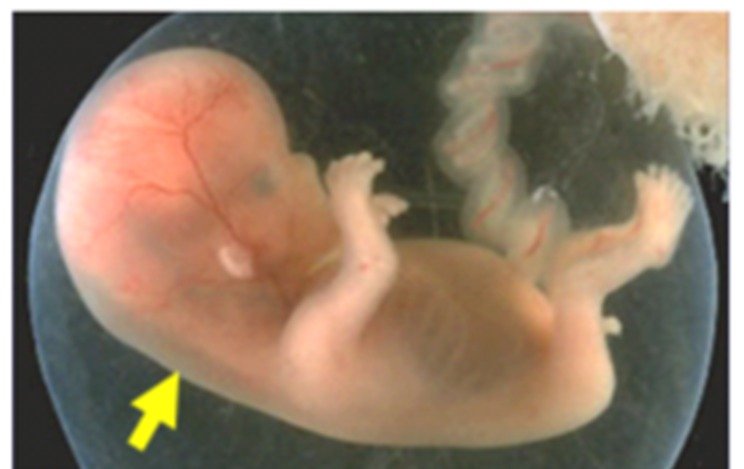
What Is First Trimester Screening (NT Scan)?
The NT scan (Nuchal Translucency scan) is a specialised ultrasound performed in early part of pregnancy to assess the baby’s risk for certain chromosomal and structural conditions.
It measures a small fluid-filled space at the back of the baby’s neck called Nuchal Translucency. Increased thickness in this area can be associated with chromosomal conditions or certain structural abnormalities.
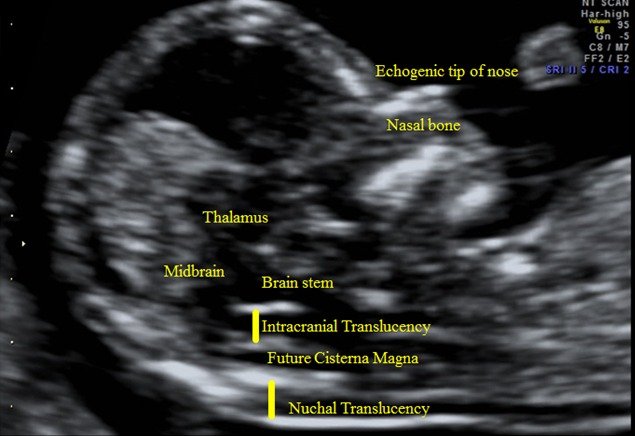
The NT scan is usually combined with a maternal blood test called the Double /Quadruple Marker Test to provide a combined risk assessment.
In some cases, parents may also opt for NIPT for more advanced screening.
Why Is the NT Scan Important?
First trimester screening helps to:
- Estimate the risk of chromosomal conditions such as Down syndrome (Trisomy 21)
- Assess risk for Trisomy 18
- Assess risk for Trisomy 13
- Detect certain early structural abnormalities
- Identify babies at risk for congenital heart defects
- Provide early reassurance when results are normal
Early detection allows timely counselling, further evaluation if required, and better pregnancy planning.
What Is the Ideal Timing for the NT Scan?
The NT scan is performed between:
11 weeks to 13 weeks + 6 days of pregnancy
The baby’s crown-rump length (CRL) should measure between 45 mm and 84 mm for accurate NT measurement.
Timing is crucial. Doing the scan too early or too late can affect accuracy.
How Is the NT Scan Done?
The NT scan is:
- A detailed ultrasound examination
- Usually done via abdominal scan (sometimes transvaginal in early weeks)
- Completely safe for both mother and baby
During the scan, we assess:
- Nuchal translucency thickness
- Presence of nasal bone
- Baby’s heart rate and tricuspid flow
- Ductus Venosus flow
- Early fetal anatomy (brain, abdominal wall, limbs)
- Placenta and amniotic fluid
The scan typically takes 20–40 minutes, depending on the baby’s position.
What Abnormalities Can Be Detected?
Abnormalities detected are:
- Increased NT
- Absent Nasal bone
- Tricuspid Regurgitation
- Abnormal Ductus venosus waveform
- Structural abnormalities
These can be seen as isolated finding or in combination and may be seen in:
- Chromosomal abnormalities
- Congenital heart defects
- Genetic syndromes
- Structural abnormalities
- Rare fetal conditions
However, it is important to understand:
👉 NT scan is a screening test, not a diagnostic test.
It gives risk estimation — not confirmation.
Many babies with mildly increased NT, absent nasal bone or tricuspid regurgitation are born completely healthy.
What Happens If the NT Result Is Abnormal?
If the screening result shows increased risk, the next steps may include:
- Detailed counselling to explain the result clearly
- Option of advanced screening such as NIPT based on other findings
- Diagnostic testing like Chorionic Villus Sampling (CVS)
- Fetal echocardiography for heart evaluation
- Follow-up detailed anomaly scan
If diagnostic tests confirm an abnormality, parents are guided compassionately regarding:
- Prognosis
- Treatment possibilities
- Continuation options
- Multidisciplinary care planning
The most important thing: You are never alone in this process.
When Results Are Normal
A normal NT scan significantly reduces the risk of major chromosomal abnormalities and provides reassurance to parents.
However, routine second trimester anomaly scan remains essential for complete structural assessment.
Is NT Scan Necessary for All Pregnancies?
Yes. First trimester screening is recommended for all pregnant women, regardless of age or risk factors.
Even low-risk pregnancies can benefit from early reassurance.
Final Thoughts
The NT scan is one of the most meaningful early checkpoints in pregnancy. It offers:
✔ Early reassurance
✔ Early detection
✔ Time for informed decisions
✔ Emotional preparedness
Pregnancy is a journey of love and responsibility. Early screening helps ensure that journey begins with clarity and confidence.
If you are between 11 and 14 weeks of pregnancy, consult your Fetal Medicine Specialist to schedule your NT scan at the right time.
FAQs
1. What is the NT scan?
The NT (Nuchal Translucency) scan is a specialized ultrasound done between 11–13+6 weeks of pregnancy to assess the risk of chromosomal abnormalities and evaluate early fetal development.
2. Is NT scan mandatory?
It is strongly recommended for all pregnancies because it provides important early screening information. It is not legally mandatory but medically advisable.
3. Is the NT scan painful?
No. It is a simple ultrasound done through the abdomen. Occasionally, a vaginal scan may be needed for better clarity.
4. What if my NT value is slightly high?
A slightly increased NT does not mean your baby has a problem. It means the risk is higher than average, and further evaluation (NIPT or diagnostic testing) may be advised.
5. What is considered normal NT?
NT varies with gestational age. Typically, less than 3 mm is considered within normal limits, but final risk depends on combined assessment.
6. What is Double Marker test?
A maternal blood test done along with NT scan to calculate combined risk for chromosomal conditions.
7. What if my screening shows high risk?
You may be advised:
- NIPT (advanced blood test)
- CVS (11–13 weeks)
- Amniocentesis (after 15 weeks)
These provide more definitive answers.
8. Can NT scan detect heart problems?
Yes. Increased NT may indicate higher risk of congenital heart defects, and detailed follow-up may be advised.
9. Does a normal NT guarantee a normal baby?
A normal NT significantly reduces risk but does not rule out all possible conditions. Routine follow-up scans remain important.
10. How long does the scan take?
Usually 20–30 minutes depending on baby’s position.