 +91 8362744443 / +91 8362744444
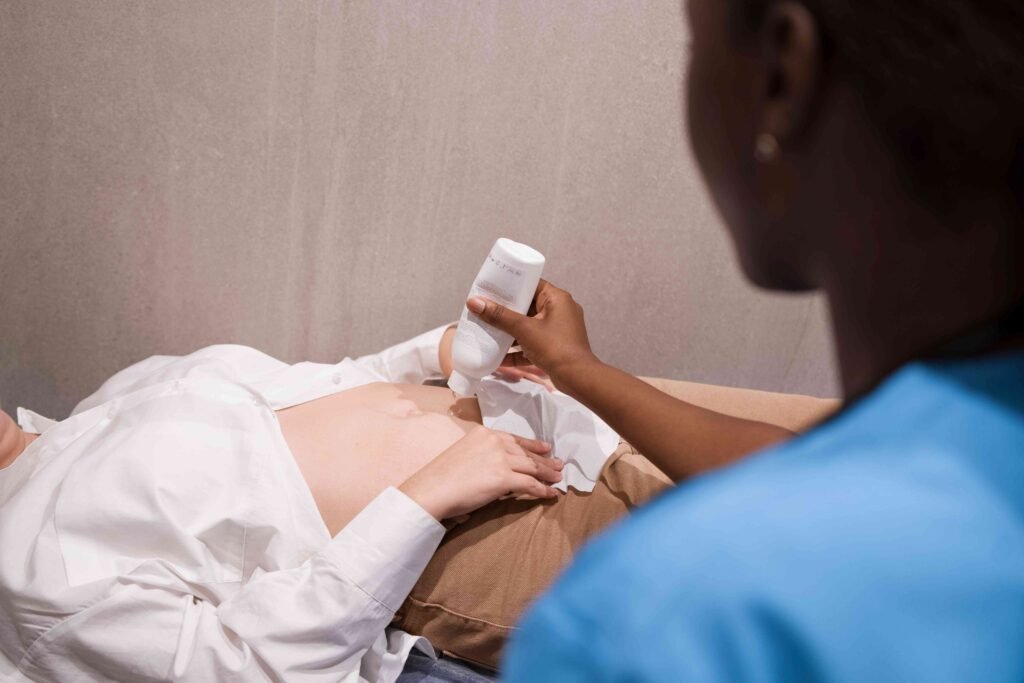
During pregnancy, most women undergo screening tests to assess the baby’s health. Occasionally, screening results may indicate an increased risk for certain genetic or chromosomal conditions. In such cases, diagnostic tests are recommended to provide clear and definitive answers.
The two most common diagnostic procedures in prenatal care are Chorionic Villus Sampling (CVS) and Amniocentesis.
As a fetal medicine specialist, my role is to guide families through these procedures with clarity, accuracy, and compassion.
What Are Diagnostic Tests?
Unlike screening tests that estimate risk, diagnostic tests:
✔ Confirm whether a condition is present
✔ Analyse the baby’s chromosomes directly
✔ Provide near 100% accuracy for chromosomal abnormalities
These tests are advised only when medically indicated.
Chorionic Villus Sampling (CVS)
What Is CVS?
CVS is a diagnostic test performed in early pregnancy to analyse a small sample of placental tissue (chorionic villi). Since the placenta and baby share the same genetic material, this sample provides accurate chromosomal information.
When Is CVS Done?
Between 11 to 13+6 weeks of pregnancy
Why Is CVS Recommended?
It may be advised when:
- First trimester screening shows high risk
- There is increased NT measurement
- There is a family history of genetic disorders
- Previous pregnancy was affected by a chromosomal/genetic condition
- Structural ultrasound abnormalities are detected
How Is CVS Performed?
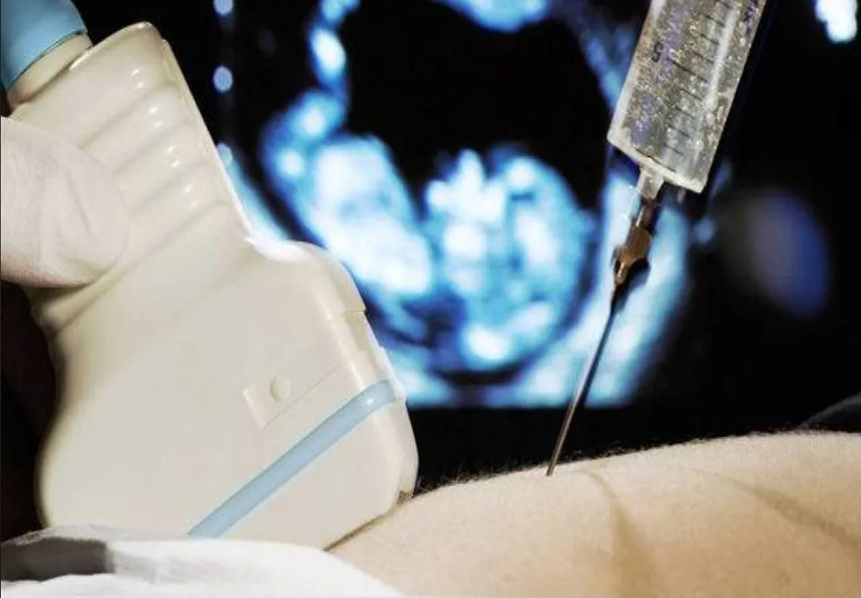
- Performed under continuous ultrasound guidance
- A thin needle is inserted through the abdomen
- A small placental sample is obtained
- The procedure usually takes a few minutes
You may experience mild cramping afterward.
Amniocentesis
What Is Amniocentesis?
Amniocentesis is a diagnostic test in which a small amount of amniotic fluid is withdrawn from around the baby. The fluid contains fetal cells that can be analysed for chromosomal and genetic conditions.
When Is It Done?
Usually between 15 to 20 weeks of pregnancy
Why Is It Recommended?
- Screening tests such as NIPT show high risk
- Second trimester screening is abnormal
- Structural abnormalities are detected on anomaly scan
- There is risk for genetic disorders
It may be advised if:
How Is It Performed?
- Done under ultrasound guidance
- A thin needle is inserted into the amniotic sac
- A small amount of fluid is withdrawn
- The procedure takes only a few minutes
Most women resume normal activities within 24 hours.
Are These Procedures Safe?
Both CVS and amniocentesis are generally safe when performed by experienced fetal medicine specialists.
There is a small risk of miscarriage, typically quoted as less than 0.5–1%, depending on various factors.
Detailed counselling is always provided before the procedure to help parents make an informed decision.
What Conditions Can Be Diagnosed?
These tests can confirm:
- Down syndrome
- Trisomy 18
- Trisomy 13
- Sex chromosome abnormalities
- Certain inherited genetic disorders
- Some metabolic conditions
Advanced genetic testing such as microarray may also be performed in selected cases.
How Long Do Results Take?
- Preliminary results may be available within a few days.
- Final detailed reports may take 3-4 weeks.
Your doctor will explain the report clearly and discuss the next steps if required.
What Happens If the Result Is Normal?
A normal result provides strong reassurance and significantly reduces the likelihood of major chromosomal abnormalities.
Routine pregnancy care continues thereafter.
What If the Result Is Abnormal?
If a condition is confirmed:
- Detailed counselling is provided.
- Prognosis and medical implications are explained.
- Available options are discussed respectfully and non-directively.
- Multidisciplinary support is arranged if pregnancy continues.
Every decision is personal and should be made with complete information and emotional support.
Emotional Considerations
Undergoing a diagnostic test can feel overwhelming. It is natural to feel anxious.
Remember:
- These tests are recommended to provide clarity.
- You are guided at every step.
- Most diagnostic results are reassuring.
Support — both medical and emotional — is always available.
Final Thoughts
CVS and amniocentesis are powerful tools that provide definitive answers when screening tests raise concerns.
They offer:
✔ Accurate diagnosis
✔ Clarity and certainty
✔ Informed decision-making
✔ Early planning when needed
If you have been advised a diagnostic test, consult your fetal medicine specialist to understand your individual risk, benefits, and options.
Frequently Asked Questions (FAQs)
Diagnostic Tests in Pregnancy – CVS & Amniocentesis
1. What is the difference between screening and diagnostic tests?
Screening tests (like NT scan, Double marker, NIPT) tell us risk or probability.
Diagnostic tests like CVS and Amniocentesis give a definite answer about chromosomal or genetic conditions.
2. When is CVS recommended?
CVS (Chorionic Villus Sampling) is usually recommended if:
- NT scan shows increased thickness
- Double marker/NIPT shows high risk
- There is a previous child with genetic disorder
- One or both parents are carriers of genetic disease
- Strong family history of chromosomal conditions
It is done between 11–13+6 weeks of pregnancy.
3. When is Amniocentesis recommended?
Amniocentesis is usually advised when:
- Screening tests show high risk
- Structural abnormalities are seen on anomaly scan
- There is suspicion of genetic syndromes
- To confirm certain infections
- For advanced genetic testing (microarray, exome in selected cases)
It is done after 15 weeks of pregnancy.
4. Are these procedures painful?
Most women describe it as mild discomfort similar to an injection.
The procedure is quick and done under continuous ultrasound guidance for safety.
5. Is there a risk of miscarriage?
Yes, but the risk is very low when done by experienced fetal medicine specialists.
- CVS: Approximately 1 in 200–500
- Amniocentesis: Approximately 1 in 200–500
Modern techniques and expertise have significantly reduced complications.
6. How long does the procedure take?
The sampling itself usually takes 5–10 minutes.
You may be observed for a short period afterward.
7. What precautions should I take after the procedure?
- Rest for 24–48 hours
- Avoid heavy lifting and strenuous activity
- Mild abdominal discomfort is normal
- Report immediately if you experience leaking fluid, bleeding, fever, or severe pain
8. How long do results take?
- Rapid test (FISH/QF-PCR): 5-6days
- Full karyotype: 12–14 days
- Advanced genetic testing (if required): May take longer
Your doctor will explain which test is appropriate in your situation.
9. If results are abnormal, what happens next?
You will receive:
- Detailed genetic counselling
- Explanation of the condition
- Discussion of prognosis and outcomes
- Guidance regarding continuation or medical termination (as per legal guidelines)
The decision is always yours, supported with clear information and compassionate counselling.
10. Can these tests detect all genetic problems?
No test can detect 100% of all genetic conditions.
However, CVS and Amniocentesis are highly accurate for:
- Down syndrome
- Trisomy 18 & 13
- Sex chromosome abnormalities
- Many inherited genetic disorders
- Certain micro deletions (if microarray is done)
11. Will I need both CVS and Amniocentesis?
Usually only one diagnostic test is needed.
The choice depends on:
- Gestational age
- Type of abnormality suspected
- Type of genetic testing required
Your fetal medicine specialist will guide you appropriately.
12. Should every pregnant woman undergo these tests?
No.
These are recommended only when there is a medical indication.
Most pregnancies do not require invasive testing.
Final Reassurance for Parents
Hearing the word “invasive test” can feel overwhelming.
But remember — these procedures are performed to provide clarity, certainty, and informed choices.
Early diagnosis empowers you with:
- Knowledge
- Preparation
- Medical planning
- Emotional readiness
And most importantly — you are never alone in this journey.